

Originally Posted On: https://www.theboxery.com/blog/how-to-stack-and-store-corrugated-boxes-so-they-dont-crush-or-warp/
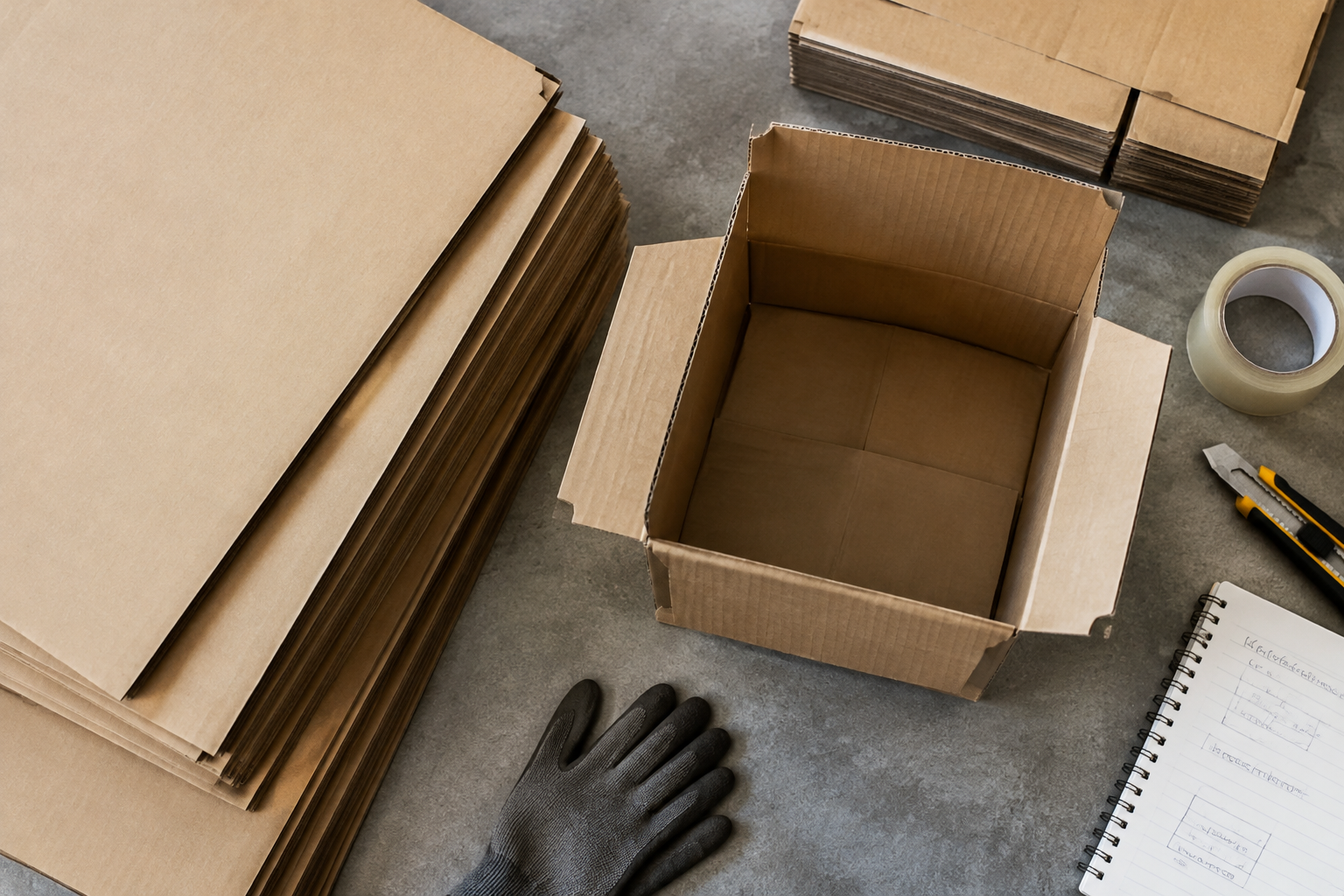
What You'll Need
Gather this before you touch a single box. It takes about 5 minutes to check and 1 to 2 hours to set up, depending on how much stock you're moving.
-
Pallets, wire shelving, or a plastic sheet. Anything that keeps corrugated boxes off bare concrete. Concrete wicks moisture straight into the bottom layer.
-
A tape measure. You'll use it to check shelf depth, stack height, and ceiling clearance.
-
A hygrometer (a cheap humidity gauge). It tells you whether your garage or spare room stays in a safe range. Aim for steady, moderate humidity rather than swings.
-
Your box specs. Know whether each size is 32 ECT single-wall or 44 ECT double-wall. That rating decides how high you can stack.
-
A marker and labels. Mark sizes and stack limits on the edge of each pile so you don't guess later.
-
Shelving or bins for mailers. Flat corrugated mailers and poly mailers store best upright or in shallow stacks, not under heavy cartons.
-
A utility knife. Handy for trimming damaged corners or breaking down boxes you can't use.
Prerequisites: a dry, temperature-stable spot with enough floor or shelf space for your monthly volume. Plan for the boxes you ship 100 to 1,000 times a month, not every size you own.
Skills: none beyond basic lifting and stacking. If you can read a box stamp, you're set.
Approximate time: 1 to 2 hours for the first setup. After that, a quick 5-minute check each time you restock.
A stack of corrugated boxes looks tough. Give it three humid weeks in a garage, though, and the bottom layer starts to bow like a tired shelf. Most sellers don't notice until a carton collapses mid-pack, or a panel warps so badly the tape won't hold.
Here's what a 20-year packaging engineer sees all the time: the weight on top isn't the main culprit. Moisture, bad floors, and mismatched box strength do most of the damage. Cardboard is paper, and paper drinks water from the air and from concrete. A 32 ECT single-wall carton that's fine on a dry shelf can fail fast on a damp slab.
For sellers shipping 100 to 1,000 orders a month out of a garage or spare room, ruined boxes aren't a small annoyance. They're lost money, lost time, and sometimes a damaged shipment that lands in a customer's hands. The good news? Storing corrugated boxes properly takes a few cheap fixes and about an hour of setup.
What You'll Get Done and What You Need Before You Start
A seller ships 400 orders a month from a one-car garage. In mid-July, the bottom row of a box stack bows out like a bad tire, and half the cartons won't fold square. Sound familiar? That's the problem this guide fixes. By the end, your corrugated boxes will stay flat, square, and ready to pack.
Materials and tools checklist for storing corrugated boxes in a garage or spare room
-
Shelving or pallets to keep cartons off the concrete
-
Tape measure and a marker for labeling sizes
-
Stretch wrap to bundle flat stacks
-
Dehumidifier or desiccant packs for damp spaces
-
Chipboard pads to level uneven stacks
Specialty cartons, like bakery boxes, need the same flat, dry spot.
Know your box strength first: 32 ECT single-wall vs. 44 ECT double-wall
Check the stamp on the bottom flap. A 32 ECT single-wall carton handles light to medium loads and crushes sooner under a tall stack. A 44 ECT double-wall carton takes far more weight. Rule of thumb: stack single-wall lower, and keep it shorter.
Step 1: Pick a Dry, Climate-Stable Spot and Prep the Floor
Damp air ruins boxes before weight ever does. Garages, sheds, and basements are the usual culprits, and that's where most home-based sellers keep their stock. Pick the driest, most temperature-steady corner you have. Interior walls beat exterior ones. Stay away from water heaters, dryer vents, and garage doors that swing open all day.
Why humidity warps corrugated cardboard faster than weight does
Corrugated fiberboard soaks up moisture from the air. As it does, the fluting softens and the stacking strength drops. Even a stack that held fine in March can sag by August. Keep the room below roughly 50% humidity if you can (a cheap hygrometer tells you in seconds). Stock like Corrugated packaging stays flat and square much longer in dry air.
Get boxes off concrete: pallets, shelving, or a plastic sheet barrier
Concrete wicks moisture straight up into the bottom layer. Fix that first.
-
Pallets: the best choice for bulk cases of boxes.
-
Wire or metal shelving: good for small sizes and flat Mailer boxes.
-
Plastic sheet barrier: a stopgap under a pallet or stack when nothing else is handy.
Step 2: Store Boxes Flat or Knocked Down and Stack Them the Right Way
Why do some box piles stay square for months while others sag in three weeks? Humidity matters, but stacking habits matter more. Keep everything off the concrete on a pallet or shelf, and don't push it against a damp garage wall.
How high to stack flat, unassembled corrugated boxes before the bottom layer bows
Flat bundles carry load well, but the bottom bundle takes the abuse. A solid rule of thumb: cap stacks at about 4 feet in a garage or spare room. Lay bundles flat, never on edge. Edge-standing bundles bow fast. Order from reliable Corrugated box suppliers in case-sized bundles, so each stack stays small and easy to lift.
Stacking assembled shipping boxes: heavy on the bottom, edges aligned, no overhang
Once built, the same logic applies. Follow this order:
-
Heaviest on the bottom. Packed boxes go first, empties on top.
-
Align the edges. Corrugated strength lives in the vertical walls, so corners must sit directly over corners.
-
No overhang. Even a half inch hanging off crushes the flaps below.
Sturdy Corrugated cartons hold up best when stacked three or four high. Beyond that, shelve them instead.
Step 3: Match Box Strength to Stack Height and Storage Time
A box at the bottom of a stack can lose about half its rated strength in a few weeks of sitting under load. That's why the ECT number on the stamp isn't the whole story. Stack height and storage time decide what you really need.
Here's the rule of thumb. For a few days of staging, standard 32 ECT single-wall corrugated boxes work fine up to roughly five layers. For anything sitting a month or longer, cut the stack height in half or step up to 44 ECT double-wall. Dense products like books or candles? Go stronger, always.
-
Under 2 weeks: 32 ECT, stack up to five high.
-
1-3 months: 32 ECT, stack two or three high, or switch to 44 ECT.
-
Humid garage: drop one layer and use pallets or shelves.
Not sure what grade you're holding? Ask Corrugated box manufacturers for the ECT rating on each size. Lightweight flat items are a different story, since corrugated mailers store flat and carry almost no load stress at all.
Step 4: Shelve Mailers, Poly Mailers and Odd Sizes to Save Space and Cut Dimensional Weight Mistakes
Boxes aren't the only thing worth stacking.
Plenty of sellers assume every package needs a rigid carton, then wonder why their shipping bills keep climbing. Flat storage tells a different story.
Corrugated mailers fold flat, so hundreds fit where dozens of assembled cartons would. Poly mailers take even less room. In a garage, that's the difference between stocking six sizes and stocking twelve.
-
Mailers: Stack flat on a shelf, never on edge, so the scores don't bow.
-
Poly mailers: Keep them in their cases on a shelf, off the concrete floor.
-
Odd sizes: Give tall and long boxes a vertical bin. Don't lean them against a wall.
Label each shelf with the outside dimensions. Fewer wrong-size grabs means fewer dimensional weight surprises, and that's money you keep on every order.
Need a mix to test fits before committing? Bulk corrugated boxes in assorted sizes work well for that.
Common Mistakes and Troubleshooting: Crushed Corners, Bowed Panels and Damp Cartons
A seller opens the garage door after a rainy week and finds the bottom row of corrugated boxes slumped like wet bread. The corners are mashed. Two panels bow outward. Can any of it ship? Sometimes, yes.
How to tell if a warped or crushed box is still safe to ship
Run three quick checks before you decide.
-
Press the walls. If they spring back firmly, the fluting is intact. Soft or mushy means it's done.
-
Check the corners. A dented corner that still holds its shape is fine. A split or collapsed one isn't.
-
Look for stains. Dark, damp patches mean lost edge crush strength. Toss those.
Mild bowing alone doesn't ruin a carton. Crushed flutes do.
Quick fixes for boxes that have already started to sag
Pull the stack apart. Let slightly damp cartons dry flat for 24 hours, away from heat. Then restack with the heaviest boxes on the bottom and no more than five high.
Moisture keeps causing trouble in garages? Switch your riskiest stock to weatherproof boxes — keep everything off the concrete on a pallet or shelf.
Next Steps: How to Check Your Storage Setup and Reorder at the Right Size
Don't wait for a crushed stack to tell you something's wrong. Run a quick audit this week.
-
Check the bottom row. Look for bulging walls, soft corners, or a bowed flap. Any of those means the load is too heavy for that box's ECT rating.
-
Measure stack height. Keep stacks of standard 32 ECT corrugated boxes short, and move heavier loads to double-wall.
-
Test the floor. Garage concrete sweats. Put pallets or a shelf under everything.
-
Count your sizes. If three sizes barely move, stop reordering them.
Now reorder. Pull your last 20 shipments, note the box size each one used, and buy the two or three sizes that cover most of them. Flat mailers store with far less floor space, so swap them in wherever an item is slim.
Seal what you buy properly, too. A reliable packaging tape for boxes keeps flaps from lifting in humid storage. Tight fit, dry shelf, short stacks. That's the whole routine.
How-To FAQ
How high can I stack corrugated boxes before the bottom ones crush?
For flat, unassembled 32 ECT boxes, keep stacks under about 4 feet. Assembled boxes with product inside need a lower limit. Heavy items go on the bottom — the stack shouldn't lean or overhang the edges. If you see the bottom layer bowing, you've gone too high. Take a layer off.
How long can I store corrugated boxes before they weaken?
Dry, climate-stable storage can hold boxes for many months without trouble. Time matters less than moisture. A box in a damp garage can lose strength in weeks, while one on a shelf in a dry spare room stays solid. Use the oldest stock first and check the bottom of each stack monthly.
Can I still ship in a box that has warped or crushed corners?
Only if the panels are flat, the corners hold their shape, and the box isn't damp or soft. Press on each wall. If it springs back firmly, it's fine for light items. If it feels spongy or the flutes are visibly flattened, recycle it. A weak box costs you more in damage claims than a new one.
Is it okay to store boxes directly on a concrete garage floor?
No. Concrete pulls moisture up into the bottom layer, and the cardboard wicks it right in. Put boxes on a pallet, a shelf, or at least a plastic sheet over a few wood slats. Even a few inches of air gap makes a real difference.
Should I store boxes flat or already assembled?
Flat is better for almost every home-based shipper. Knocked-down boxes take a fraction of the space, and they hold their strength longer since they're not carrying any weight. Only pre-build the sizes you ship daily, and keep the count small. Mailers and poly mailers also store flat, so you can fit far more variety in a small footprint.
What's the quickest fix for boxes that have started to sag?
Move them to a dry spot right away and restack them with fewer layers. Let slightly bowed flat boxes sit under even, light weight for a day or two, so they flatten out. Don't try to dry soaked boxes. Replace those, and fix the moisture source before you reorder.
Good storage comes down to three habits. Keep the floor dry, keep the stacks honest, and match the box to the job. Sellers who run a garage or spare room operation rarely lose corrugated boxes to one dramatic event. Slow damage does it. A damp slab of concrete wicks moisture upward for months, and a stack built one layer too high squeezes the bottom row until the corners give out.
The fix is cheap and mostly free. Lift cartons onto pallets or shelving, stack heavier 44 ECT double-wall boxes below lighter 32 ECT single-wall ones, and keep edges lined up so the load rides on the vertical walls instead of the flaps. Mailers belong on shelves, flat and out of the way.
Then look at what's already in the room. Any box with a bowed panel or soft corner should be pulled before it ships, because a weak carton costs more in replacements than it ever saved on the shelf.
Tonight, walk the stacks, measure the bottom layer against the heights in this guide, and write down which sizes are running low. Then order those sizes from The Boxery before the next rush hits.