
- Minimizing side effects is the #1 priority for Americans seeking pain relief – an AI-driven audience analysis of over 907,000 people found it placed at the top of their list.
- Long-term success outranks short-term comfort – 84% of patients say lasting results matter more than how comfortable treatment feels along the way.
- Improved mobility and emotional well-being are the two most valued outcomes after pain treatment, making functional recovery just as important as pain reduction.
- Advanced techniques like ultrasound-guided injections and regenerative medicine are changing what is possible with precise, lower-risk pain management.
- Finding a specialist who treats the whole picture – not just the symptom – is a key factor discussed throughout this post.
Minimizing Side Effects Is a Critical Priority for Pain Patients
Living with pain is exhausting enough. The last thing anyone needs is a treatment that swaps one problem for another. Yet that trade-off – relief at the cost of drowsiness, nausea, cognitive fog, or worse – is exactly what pushes so many patients away from treatments that could otherwise help them.
An AI-driven audience analysis of 907,901 Americans found that minimizing side effects ranked as the top priority when seeking pain relief. That level of agreement is rare in healthcare data and signals something important: patients are not just asking for less pain. They want a better life. A separate patient survey found that just over 50% of patients explicitly want pain medication with fewer side effects – reinforcing just how much this concern shapes treatment decisions.
Medical journal findings support this, showing that minimizing side effects is directly tied to patient satisfaction and long-term adherence to treatment – especially for chronic conditions where care may span months or years.
Why Side Effects Derail Pain Treatment
Side effects do not just cause discomfort – they actively interfere with why someone sought treatment in the first place. When medication makes it hard to focus at work, stay awake, or feel emotionally stable, the relief starts to feel like a different kind of burden.
Quality of Life as the Real Benchmark
Patient survey data consistently shows a strong preference for treatments that preserve quality of life. Drowsiness and nausea are among the most commonly reported concerns, but the issue runs deeper. Pain that interrupts sleep creates a cycle that makes every symptom harder to manage. According to Vertex Pharmaceuticals’ State of Pain in America survey, 69% of Americans said acute pain disrupted their rest, and 65% reported feeling irritable or emotionally drained as a result. Managing those knock-on effects is central to pain relief, not secondary to it.
Why Long-Term Success Outweighs Short-Term Comfort
The data reflects a patient mindset that is surprisingly clear-eyed. When asked what mattered most in a treatment plan, 84% of respondents prioritized long-term success – even knowing that short-term comfort might be sacrificed. Only 2% ranked comfort during treatment as their top concern. This reflects the reality of chronic pain: patients are not looking for a quick fix. They want a plan that holds up. Side effect management and functional outcomes must remain central to any long-term strategy.
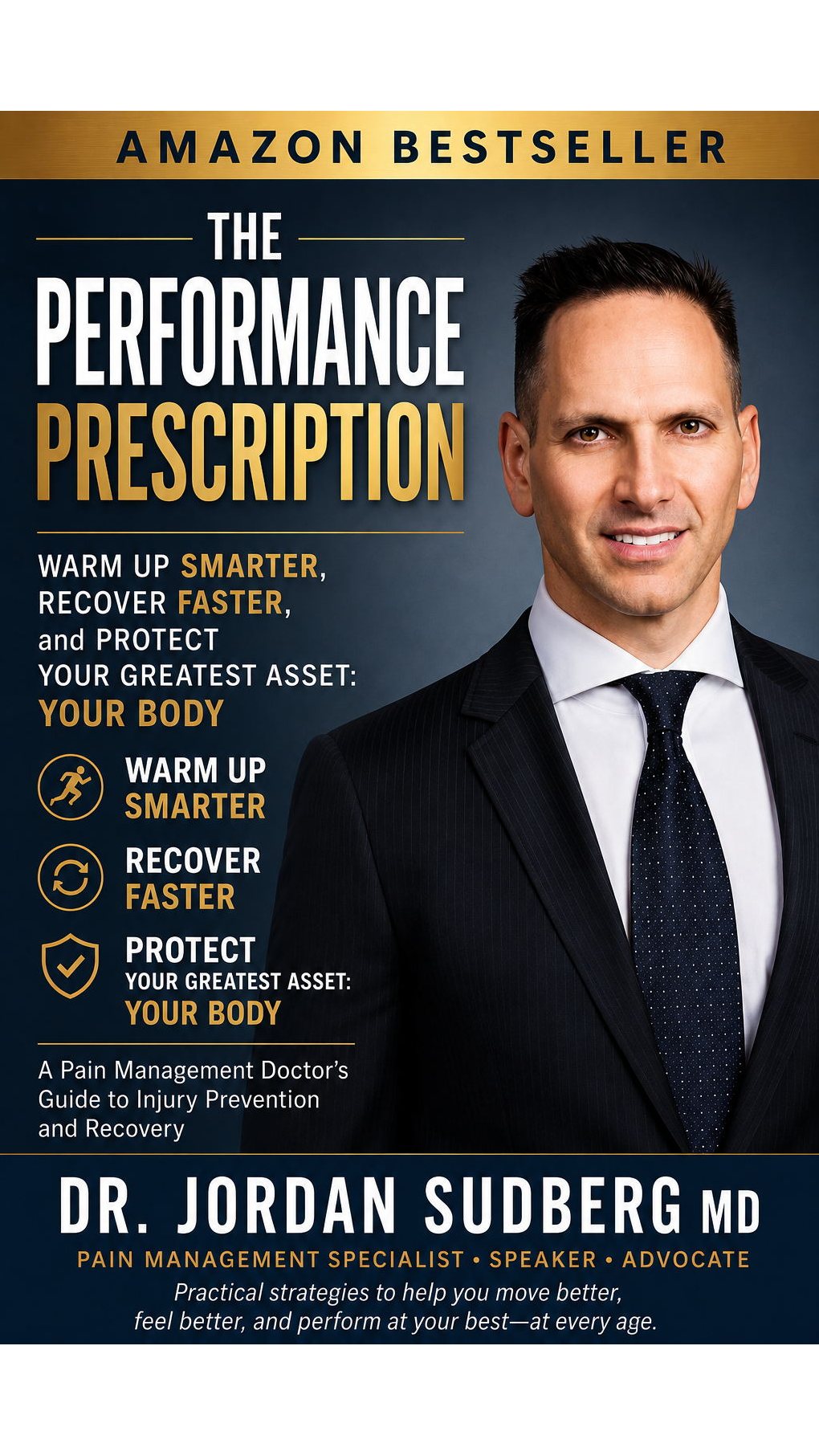
Dr. Jordan Sudberg’s Approach to Minimizing Side Effects
In a field where patients are increasingly selective and well-informed, the credentials and methods behind a pain management practice matter a great deal.
Board Certification and Long Island Roots
Dr. Jordan Sudberg is Board Certified in Physical Medicine and Rehabilitation and serves as CEO and Medical Director of Spine and Sports Rehabilitation on Long Island, New York. His training includes a residency at North Shore Long Island Jewish Hospital, an Internal Medicine Internship at Staten Island University Hospital, and research positions at both Harvard University’s Massachusetts General Hospital (tissue engineering) and Columbia University (cardiovascular exercise physiology). That breadth of academic and clinical background directly shapes his approach to care – one that focuses on targeted, evidence-informed methods rather than broad-spectrum medication strategies.
His professional memberships span organizations including the American Academy of Physical Medicine and Rehabilitation, the World Academy of Pain Medicine Ultrasonography, and the Association of Academic Physiatrists, among others – a network that keeps his practice current with evolving standards.
Regenerative Medicine as a Lower-Risk Alternative
During his pain management training, Dr. Sudberg developed a specific interest in regenerative medicine – an area that continues to gain traction for good reason. Approaches like Trigger Point Therapy, platelet-rich plasma (PRP) therapy and viscosupplementation are being studied for their potential to deliver meaningful upper back pain relief with fewer systemic side effects compared to traditional medications.
Studies have found that targeted regenerative injections can lead to significant pain reduction and improved function with minimal reported adverse events for chronic knee pain. For patients who have struggled with side effects from conventional treatments, this kind of precision-targeted approach represents a meaningful alternative – one that addresses the root issue rather than masking symptoms at a systemic cost.
Ultrasound-Guided Injections: Precision That Reduces Risk
Accuracy matters enormously in interventional pain procedures. When medication lands off-target, it can miss the intended site entirely – or cause complications in surrounding tissue. Ultrasound-guided injections address this directly by providing real-time visualization during the procedure, allowing the clinician to confirm exactly where the needle is going before any medication is delivered.
Clinical studies have shown that this guidance technique enhances precision, reduces the risk of complications, and improves the reliability of outcomes. Regulatory and clinical bodies now widely recommend ultrasound or fluoroscopy guidance as a standard of care for interventional pain procedures. Dr. Sudberg is certified and trained in ultrasound-guided injections – a technical credential that translates directly into safer, more targeted treatment for patients.
What Patients Actually Want From Pain Relief
Understanding what patients value most helps clarify what good pain management actually looks like – and the data from over 900,000 Americans paints a fairly consistent picture.
Mobility: A Highly Valued Outcome and Success Metric
51% of Americans named improved mobility as the most important outcome from pain treatment. Movement is often the first freedom that pain takes away – the ability to walk, exercise, bend, or simply get through a day without restriction. That same priority shows up in how patients measure success: 68% said increased mobility is what makes a treatment effective. A multicenter trial of patients with chronic pain after lumbar spine surgery found that those treated with spinal cord stimulation showed significant improvements in walking speed, daily step counts, and sustained activity duration compared to their pre-treatment baseline.
Sleep and Emotional Well-Being Close Behind
Emotional well-being ranked second, with 28% of patients identifying it as the most important outcome – a reflection of how deeply chronic pain affects mood, outlook, and resilience. Better sleep followed at 21%, consistent with broader data showing that pain-related sleep disruption creates a feedback loop that makes symptoms harder to manage. Taken together, these priorities reveal that patients are not only seeking a lower pain score. They want their life back.
Evidence-Backed Treatment Drives Patient Trust
Across every category of the audience data, one pattern holds steady: patients are motivated by proof. 100% of respondents said that proven research results were the single biggest inspiration for trying a different pain management method. Not word of mouth. Not cost. Not convenience – research-backed outcomes.
This aligns with broader trends in pain medicine. A review of current practices and innovations in pain management research emphasized that treatments across all modalities – from medications to behavioral therapies to neuromodulation – must stand on strong clinical validation to earn patient confidence. The American Academy of Pain Medicine reinforces this with a multidisciplinary framework that prioritizes non-pharmacological interventions and minimally invasive procedures where possible, specifically to reduce reliance on medications with significant side effect profiles.
For patients, the practical takeaway is this: the specialist matters, and so does the evidence behind the methods they use. A practice grounded in clinical research, advanced certifications, and continuing professional development offers a meaningful advantage over one that is not.
Side Effect Minimization Matters – Find a Specialist Who Prioritizes It
Pain management is not one-size-fits-all. What works well for one patient may be poorly tolerated by another, and the gap between effective relief and disruptive side effects can determine whether someone sticks with a treatment plan or abandons it entirely. Research confirms that patients are far more likely to adhere to a regimen when they feel the benefits genuinely outweigh the drawbacks.
The combination of board-certified expertise, regenerative medicine techniques, and ultrasound-guided precision represents what modern, patient-centered pain management looks like when side effect minimization is built into the foundation – not added as an afterthought.
For those on Long Island managing chronic or acute pain, Spine and Sports Rehabilitation offers expert pain management care under Dr. Jordan Sudberg MD, with a focus on targeted, evidence-based treatment designed to get patients moving, sleeping, and living better.
Spine and Sports Rehabilitation
frontdesk@spineandsportsrehabny.com
+1 631 203 4300
1717 Veterans Memorial Hwy
Islandia
New York
11749
United States


