
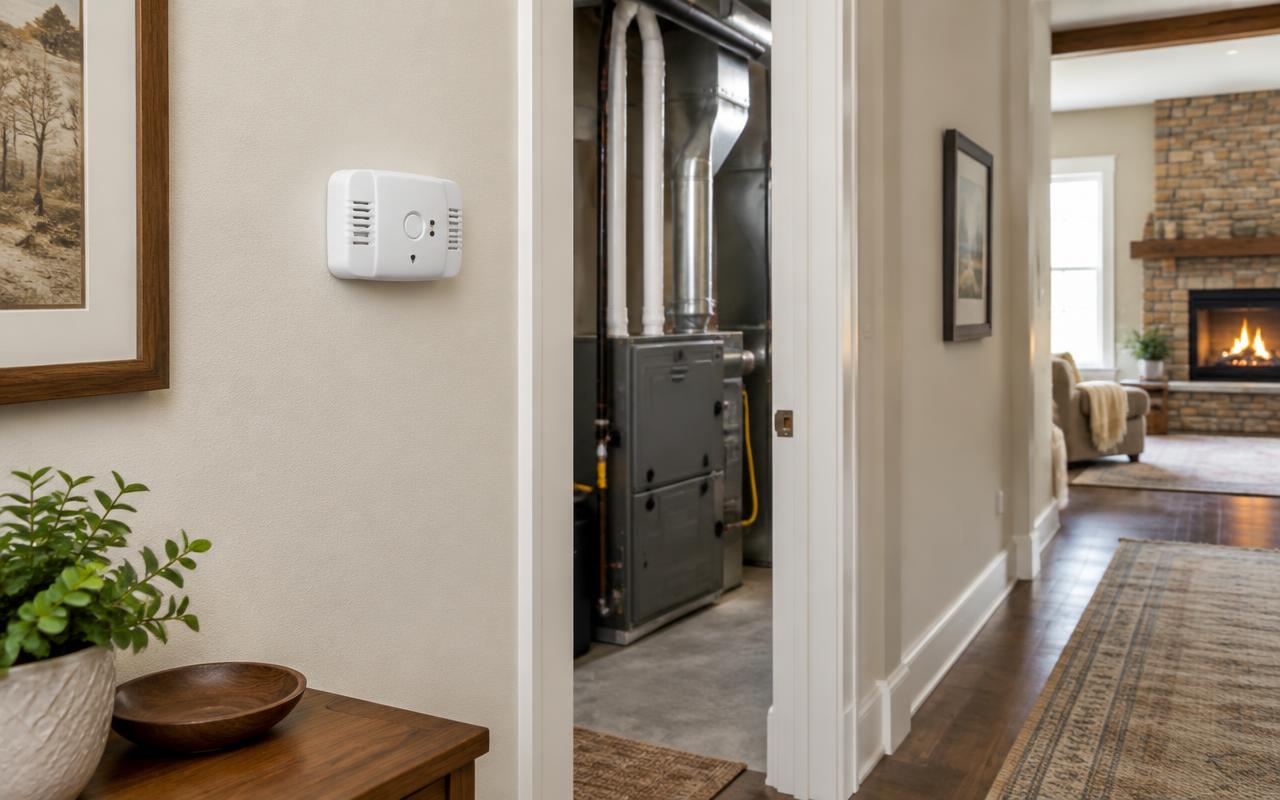
X-SENSE delivers practical data on what carbon monoxide is (and why it is a risk), where to install CO alarms and how, maintaining CO alarms, and the evolving integrated CO detection choices for homeowners.
Carbon monoxide (CO) can sneak into a house without smoke or fire making an obvious warning. It does not smell or color, so people can be exposed to it without knowing that there is a problem.
These are pretty normal household sources like furnaces, fireplaces, gas appliances, some portable generators, and vehicle exhaust from an attached garage. CO can build up in an indoor area, also resulting from problems with ventilation and unmaintained fuel-burning equipment.
That is why a residential CO detector is a crucial component of home safety. But having the alarm isn’t all the answer. Besides considering where it is placed, how it operates, when it should be tested, and what the alerts and alarms indicate, homeowners should think about these things.
Carbon Monoxide Is Different From Smoke
A carbon monoxide alarm is not a smoke alarm.
Smoke alarms are meant to warn of the signs that indicate that a fire may be starting. Carbon monoxide alarms are used to detect CO (a product of incomplete combustion). It is, therefore, not safe to assume that a typical smoke alarm also gets the job done when it comes to carbon monoxide protection without having been specifically designed as an alarm for smoke and carbon monoxide.
Headache, dizziness, nausea, weakness, and confusion are all possible symptoms of CO exposure. Occupants might not connect some of these symptoms to an indoor issue, since some of these are similar to common diseases.
A working alarm is an excellent warning – something which does not rely on anyone’s sight or smell of the hazard.
Think About Placement Before Buying
Location is key with an alarm.
CO alarms should be installed on all levels of the home and outside sleeping areas, according to the U.S. Consumer Product Safety Commission. Installation instructions provided with each device will also need to be adhered to by homeowners; however, due to the wide variety of devices available, installation will vary for each.
The alarm should not be placed behind furniture, curtains or other objects that could block the alarm from working properly. When it is not recommended by the manufacturer, any locations near heating vents, or otherwise unsuitable locations should be avoided.
If you have a home that is larger than that or multiple levels, you will need multiple alarms for proper coverage. This is when you might want to look at other factors besides shape or price in more than only a device.
When reviewing a carbon monoxide alarm, homeowners can now find standalone, wireless interconnected, app-connected, plug-in, and battery-powered options. Understanding those differences makes it easier to choose a system suited to the property rather than purchasing equipment based on features alone.
Interconnected Alarms Can Extend the Warning
If there is an alarm in a large house, on a lower floor, that might make it harder to hear from a bedroom upstairs. The solution is to use interconnected systems, which enable compatible alarms to communicate.
If one alarm detects a hazard, all the like alarms in the network can also alert.
Smart systems can provide an additional layer of information via mobile notifications or through the status monitoring of the products. These types of functions may help, but don’t replace the actual alarm systems installed within the premises.
X-SENSE XC01-M smart carbon monoxide alarm, is designed to connect with the X-Sense SBS50 base station and supports interconnected alerts and app notifications. The model uses a replaceable battery and an electrochemical CO sensor and can form part of a broader compatible home alarm network.
For homeowners considering connected equipment, it is important to check system compatibility before purchasing additional devices. Not every alarm will communicate with every base station or wireless network.
Testing Is Part of Ownership
CO alarms must be kept maintained post installation.
Homeowners should follow the manufacturer’s instructions for the test function and beware of low battery indications, fault notifications, and end-of-life messages. The CPSC suggests replacement of CO alarms every month.
This test button will normally indicate that the alarm’s circuit and audible alarm(s) are working, but the sensor is not being completely tested for accuracy. The replacement interval should thus still be being observed even if a device is considered to be working fine when it is old.
Also, one benefit to be gained from visiting a property with existing alarms is to find out their age. This is especially important when someone has just moved into their new home and might not have records on hand as to when they acquired the devices.
Know What to Do if an Alarm Sounds
No alarm should be ignored even if smoke was not visible or there was no obvious odor.
When CO is detected (activation of the CO alarm), occupants must ensure that they react to the alarm’s instructions for the emergency and local applicable directions for safety. Those who are suspected of having CO poisoning should be taken immediately outside into fresh air and emergency help called.
Before a home is deemed safe to re-enter, it is also imperative to identify and address the source. Fuel-burning appliances, heating, chimneys, vents, and other potential sources may need to be inspected by a suitably qualified person.
CO alarms would still allow the buildup of carbon monoxide. Regular maintenance of appliances and heating equipment, therefore, continues to be key to prevention.
Make CO Detection Part of a Wider Safety Plan
A combination of multiple home safety measures is the most effective.
Smoke alarms, CO alarms, using fuel-burning appliances responsibly, maintaining heating systems properly, and having an emergency plan are all for different purposes. Homeowners should inspect these regularly and not wait until an alarm has a life expiration or a household issue has arisen.
Ultimately, it is practical considerations—size of the property, number of floors, preferred power supply, interconnected coverage, and ease of system maintenance—that influence the choice of carbon monoxide alarm.
Familiarity with those factors can help homeowners make a well-informed decision and help keep CO detection an essential element in the home’s safety program.
About X-SENSE Innovations
Founded in 2013, X-SENSE Innovations operates from its registered U.S. address at X-SENSE USA LLC, 1209 Orange St, Wilmington, DE 19801, and specializes in developing certified home fire and safety solutions for residential environments.
The company focuses on producing professional and user-friendly safety devices, including domestic fire alarms such as smoke, carbon monoxide, and heat alarms, as well as smart home safety systems covering fire protection, intrusion detection, and indoor environment monitoring.
More information is available at https://www.x-sense.com/.
Media Details
Contact Person Name: Farrukh
Company Name: X-SENSE
Email: service@x-sense.com
Website: https://www.x-sense.com/
Phone: +1 (833) 952-1880


