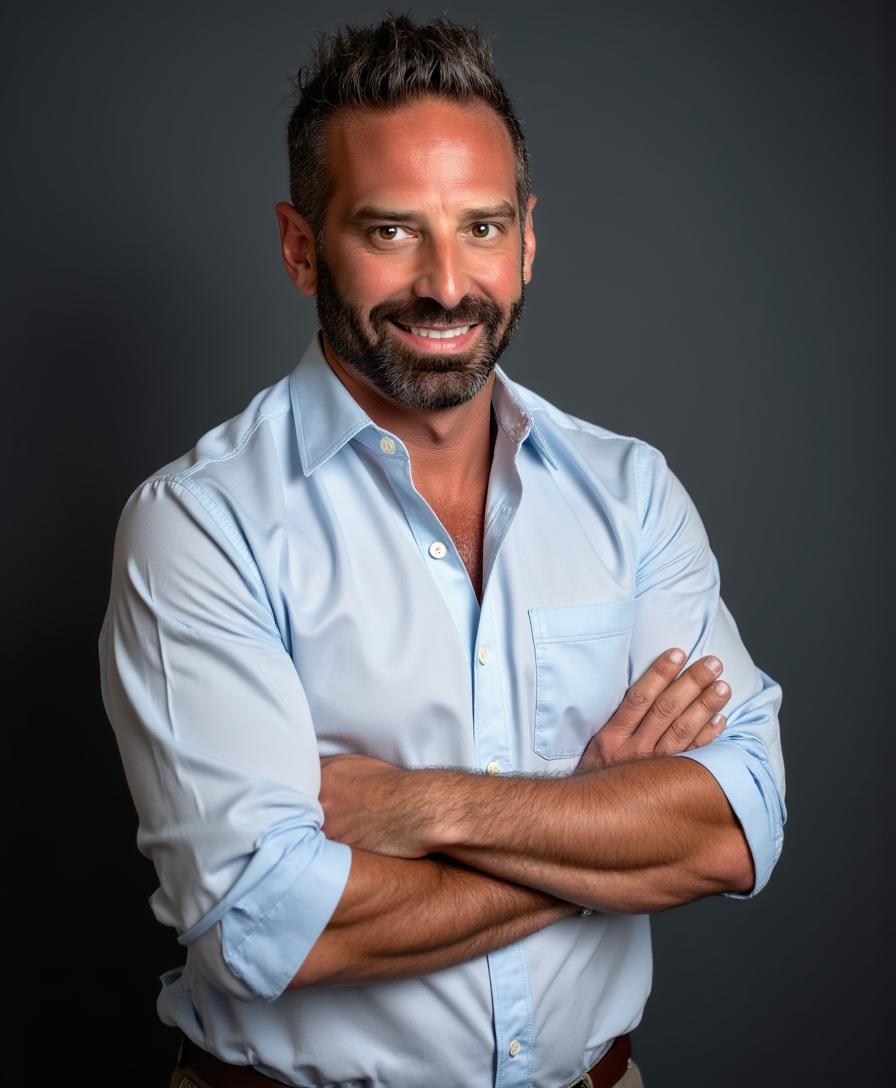
ResilExec® Coaching founder Brian Baldari, Pharm.D., MBA, argues that conventional training prepares leaders to run departments rather than to influence enterprises, and outlines the shift he believes is required.
Brick, NJ October 05, 2026 –(PR.com)– Capable professionals who excel at daily operations frequently find themselves blocked from executive advancement. According to Brian Baldari, Pharm.D., MBA, founder of ResilExec® Coaching, this is one of the most common patterns he encounters in his work with Associate Directors, Directors, and Senior Directors. In his assessment, these leaders deliver projects on time, manage large teams, and solve complex problems, yet are routinely passed over when senior positions open.
Baldari believes this pattern points to a flaw in how organizations approach professional growth. In his view, traditional leadership development models prioritize execution and tactical efficiency, skills he considers necessary for early and mid-career success but insufficient preparation for the executive suite.
“Top performers become trapped by their own success,” Baldari says. “The competencies that earned them their current roles become the exact reasons they are viewed as unsuitable for strategic leadership positions.”
Where Baldari Sees Conventional Training Falling Short
In Baldari’s observation, most corporate training initiatives focus on helping managers handle immediate challenges. He points to workshops covering conflict resolution, time management, and process optimization as examples of programs that teach leaders to run their current departments more efficiently rather than to influence enterprise strategy.
He argues that executive roles require a different perspective entirely. In his view, a Vice President is not evaluated on the ability to manage a department’s daily workflow but on the capacity to forecast market conditions and align cross-functional teams.
“Capable people assume that working harder and delivering better metrics will eventually produce a promotion,” Baldari says. “They wait for recognition that never arrives, and eventually they leave.”
The Super-Operator Pattern
Baldari uses the term super-operator to describe leaders who become indispensable to the daily functioning of their business units. He observes that organizations naturally rely more heavily on those who handle crises well, and that this reliance compounds over time.
In his assessment, that indispensability feels like professional security but functions as a constraint. He believes senior executives hesitate to promote a super-operator because replacing them would disrupt operations, leaving the leader too important to their department to be elevated above it.
Authority Versus Influence
Another limitation Baldari identifies is a reliance on formal authority. He notes that mid-level managers typically achieve goals by directing teams that report to them, with the organizational power to assign tasks and expect compliance.
At the executive level, he argues, that authority becomes far less useful. In his experience, senior leaders must drive initiatives across departments where they hold no direct control, building consensus among peers and persuading stakeholders rather than issuing direction.
Baldari believes most conventional programs do not address how that influence is built. In his view, they do not teach rising leaders to map organizational power structures or form strategic alliances, which is why he sees successful managers struggle to gain traction outside their own functions.
Treating Advancement as a System
Baldari’s Promotion Math™ framework treats advancement as a function of five variables: Performance, Visibility, Sponsorship, Narrative, and Timing. In his assessment, strong performers optimize the first and leave the remaining four unattended, then attribute the outcome to politics.
“Performance is the entry fee,” Baldari says. “It gets you considered. It does not get you selected. Four of the five variables have nothing to do with how well you do your job, and those four are the ones nobody explains to you.”
The framework, as Baldari describes it, evaluates how a leader’s contribution is characterized in the rooms where advancement decisions are made, and whether their visibility among decision-makers matches their actual capability.
Role Design and Access
Baldari also points to role design as an element he believes traditional development overlooks. He observes that many capable leaders carry significant responsibility without corresponding authority or access, and considers that imbalance a limiting factor.
He recommends assessing reporting relationships and communication channels directly. In many cases, he says, an individual delivers strong results while remaining excluded from the conversations where strategy is formed.
A Clear Path Forward
Baldari believes a structured approach removes the ambiguity leaders face when relying on conventional models. By focusing deliberately on visibility, sponsorship, and narrative, he argues, leaders can influence their own trajectory and learn to communicate value in terms that resonate with senior decision-makers.
“A promotion is the outcome, not the strategy,” Baldari says. “The strategy is building the performance, visibility, sponsorship, narrative, and timing that make the next move possible.”
In his view, operational success remains the foundation of a strong career, but sustained executive influence requires a departure from the models he believes keep talented professionals in mid-level roles.
About Brian Baldari
Brian Baldari, Pharm.D., MBA, based in Brick, New Jersey, is the founder of ResilExec® Coaching and Resilient Performance Group LLC. He spent 24 years inside pharmaceutical, healthcare, and enterprise leadership organizations, held five successive Director-level roles, and advanced from Director to Vice President and Senior General Manager in 18 months. He led the commercial launch of 14 brands across rare and chronic disease categories, led an organization of more than 250 people, and has mentored more than 50 leaders across three continents. Through ResilExec Coaching, he helps Associate Directors, Directors, Senior Directors, Executive Directors, and Vice Presidents accelerate career growth through personalized executive coaching, leadership development, and strategic career positioning.
Media Contact
Resilient Performance Group LLC
admin@resilexec.com
https://resilexec.com
Contact Information:
Market News
Matt Peters
415-318-3800
Contact via Email
www.searchmanipulator.com
Read the full story here: https://www.pr.com/press-release/980834
Press Release Distributed by PR.com
Media gallery