
Little Rock, AR – October 30, 2026 – PRESSADVANTAGE –
Bale Collision Center has published a consumer guide explaining how collision damage involving side mirrors and side glass can extend beyond broken glass. Released October 30, the guide focuses on three areas that can affect repair planning after a side impact: the visible mirror or glass, the components that operate or support it, and the surrounding door or body area.
The new guidance addresses a distinction that may not be apparent immediately after a sideswipe or parking lot impact. A mirror can remain attached while its mounting or electronic functions have been affected, and side glass can remain intact while changes to the door interfere with normal window movement.
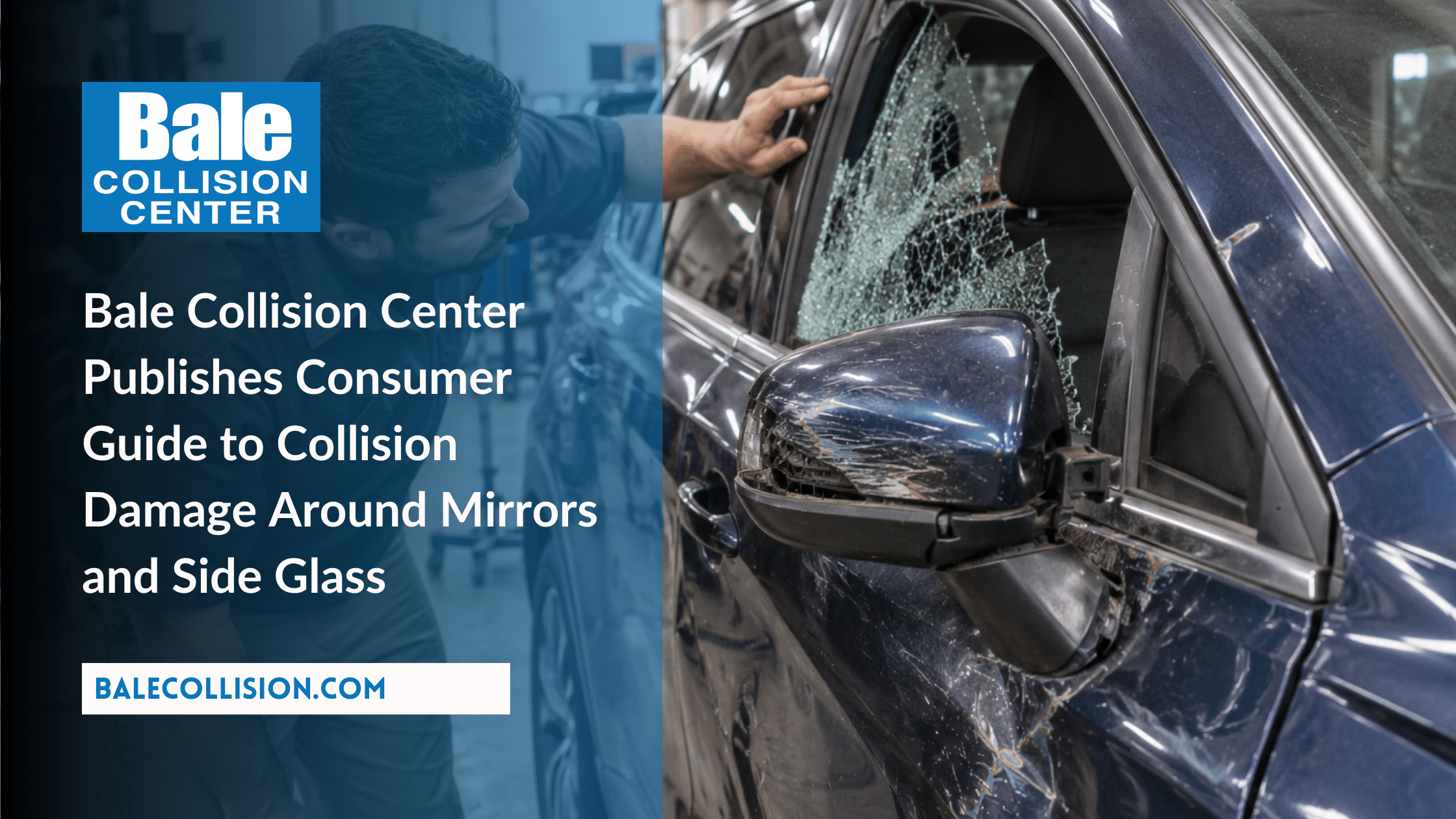
Side mirrors illustrate this distinction because modern assemblies can combine several functions within one component. Depending on the vehicle, a mirror may contain power adjustment, heating, turn-signal lighting, power-folding equipment, cameras, indicators, or other electronics in addition to the reflective glass.
When a collision strikes the mirror, evaluation can therefore extend to its housing, mounting points, fasteners, wiring, and the portion of the door supporting the assembly. A mirror that becomes loose, vibrates, changes position, or loses an electronic function after the impact provides information about the condition of that area.
Vehicle configuration also matters when replacement is necessary. Mirror assemblies for different versions of the same model can contain different equipment or electrical connections even when their exterior appearance is similar. Vehicle information and applicable manufacturer procedures can help identify the configuration installed on the individual vehicle.
The guide also addresses cameras and other driver-assistance-related equipment associated with some mirror assemblies. Collision damage involving a mirror does not automatically mean calibration is required. Diagnostic, initialization, or calibration procedures depend on the individual vehicle, installed equipment, affected components, and work performed.
Side glass presents a different repair situation because movable windows operate as part of a system inside the door. Tracks, guides, seals, a regulator, motor, switches, and other components can contribute to normal window operation depending on the vehicle.
After a door impact, a window may begin moving more slowly, stop before closing completely, make unusual noises, or sit differently against its seals. These changes can be evaluated along with the visible door and glass damage rather than assuming the glass itself is responsible.
When side glass breaks, technicians can also account for the condition of the opening and components within the door. Broken fragments may enter the door cavity or interior, while collision damage can involve tracks, guides, seals, trim, or mounting locations needed for the replacement glass to operate correctly.
Fixed side glass, including quarter glass on some vehicles, presents another configuration. Because this glass is installed within a defined body opening, collision damage to the surrounding area can influence the replacement process. The opening, seals, trim, and attachment areas can be evaluated along with the broken glass.
The October guide identifies new wind noise and water intrusion as additional observations drivers can document after a side impact. These conditions do not establish a specific cause, but they can accompany changes involving glass position, weatherstripping, seals, or the surrounding door.
The guide’s central framework separates three conditions that can otherwise be grouped together as a glass or mirror problem. The first is direct damage to the visible component. The second involves its mounting, mechanical, or electronic systems. The third involves deformation or damage to the door or body area supporting those components.
That distinction is particularly relevant after a sideswipe because a single impact can involve the mirror, glass, door panel, trim, handles, and adjoining body components. Establishing the complete affected area allows the repair plan to reflect documented damage before body work, glass replacement, refinishing, component installation, and applicable vehicle-specific procedures are completed.
Drivers can document observable changes following an accident, including a loose mirror, loss of electronic mirror functions, altered window movement, damaged seals, wind noise, water intrusion, or glass that no longer remains correctly positioned. These observations can provide useful information when the affected area is inspected.
The October 30 publication adds a collision-specific explanation to Bale Collision Center’s existing glass replacement information, with additional context available through its auto body repair information. The guide’s new focus is the relationship between the visibly damaged mirror or glass and the mechanical, electronic, and body components associated with it.
Facility information for the company’s Downtown operation is available through the Downtown Little Rock location page.
Bale Collision Center is a family-owned collision repair business that has served the Little Rock community since 1952. The company provides collision repair, auto body repair, automotive paint and refinishing, paintless dent repair, glass replacement, and ADAS services through its two Little Rock locations. Its Downtown facility is located at 100 N Cross St, Little Rock, AR 72201.
###
For more information about Bale Collision Center, contact the company here:
Bale Collision Center (Downtown)
Jason Spiller
(501) 375-0910
jspiller@baleautomotive.com
100 N Cross St, Little Rock, AR 72201, United States


